
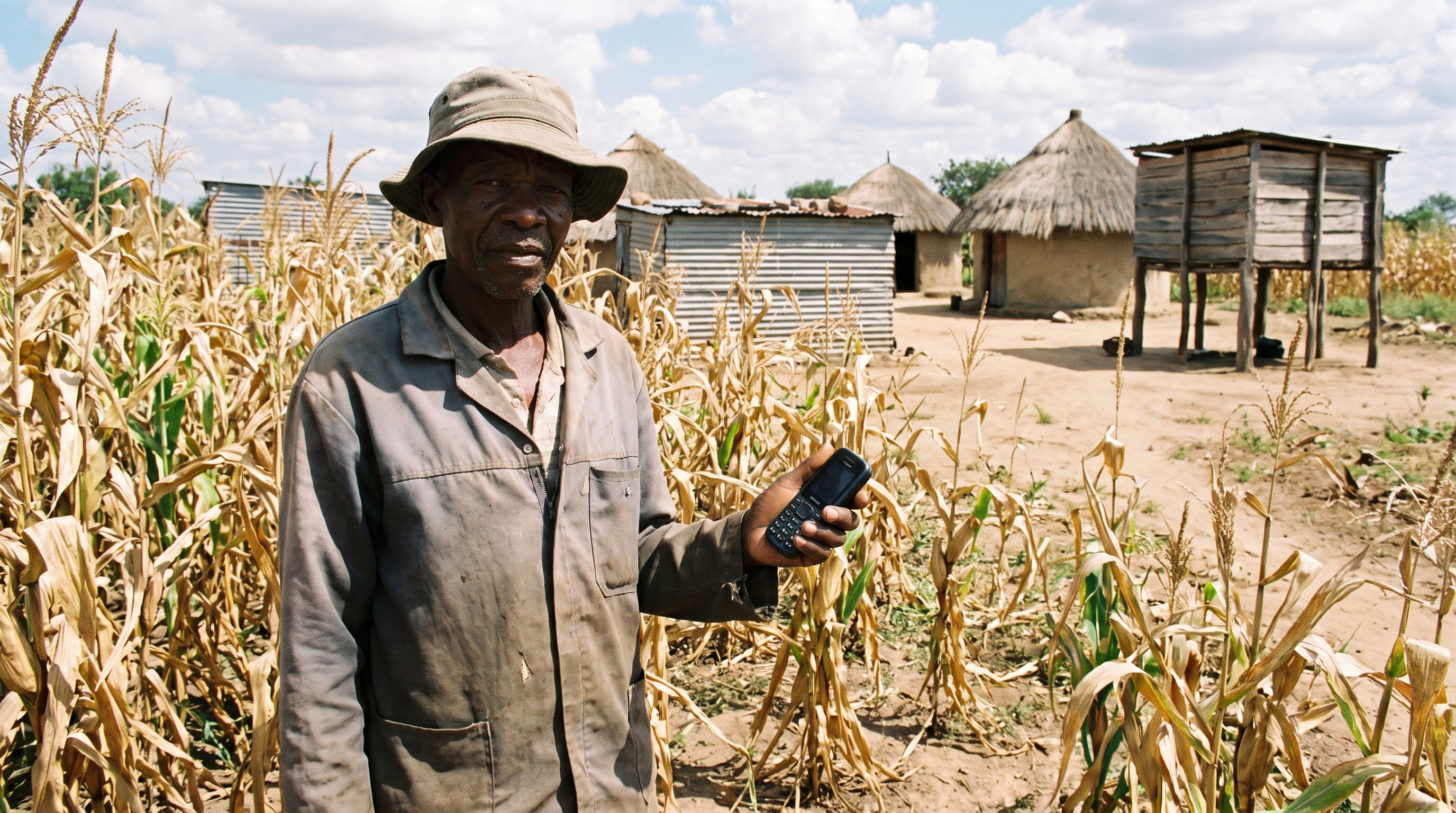
Most "farm management software" writing assumes you own a smartphone with a data plan. In Zimbabwe, that assumption leaves out a large share of the farmers who'd benefit most. Econet's EcoFarmer platform took the opposite bet in 2013 — build for the phone people already have, the basic handset with SMS and USSD, not the one they might eventually buy — and it's now one of the most widely used agricultural technology services in the country, with roughly 1.4 million registered farmers according to FAO's tracking of the platform.
What EcoFarmer actually delivers over a plain text message
EcoFarmer isn't one feature, it's a bundle delivered through SMS and short-code menus. Agribusinesses and the platform push out targeted messages based on a farmer's location and what they grow — planting-time advice, pest and soil management tips, weather forecasts, input availability, and real-time commodity prices. None of it requires a data connection, a smartphone, or literacy with an app interface. That matters in a country where mobile phone penetration far outstrips smartphone and data affordability, and where the extension officer who used to deliver this advice in person covers more ground than they can physically reach every season.
The platform's second major piece is weather-indexed micro-insurance, which is arguably the more consequential feature for a smaller farm's risk exposure. Working with Seed Co, farmers get a uniquely numbered seed pack and register the insurance by SMS; premiums as low as roughly $0.08 a day are deducted automatically from prepaid airtime balances during the growing season, and Econet's base stations cross-reference localized weather data — rainfall, temperature, humidity — to verify drought conditions without requiring a claims visit. In its original form, a payout could reach $100 for every 10kg seed pack planted if the season failed. Econet also built a partnership with the Zimbabwe Farmers' Union — the ZFU-EcoFarmer Combo — bundling ZFU membership, farming-practice training, funeral cover and the weather insurance into a single low annual subscription, a deliberate move to make the package worth paying for even in a season with no drought payout.
Why this beats waiting for smartphone-first tools to arrive
The instinct in agtech writing is to treat SMS/USSD tools as a stopgap on the way to "real" app-based platforms. That framing doesn't hold up well against what's actually reached scale in Zimbabwe. FAO's own innovation tracking rates EcoFarmer's bulk SMS service at the top of both its readiness and adoption scales — meaning it isn't an experiment, it's infrastructure that's been running and iterating for over a decade. A precision-ag dashboard or a drone monitoring subscription is a genuinely useful tool for the farm that can afford data, a smartphone, and the learning curve — but it's solving a different problem than reaching the farmer using a $15 handset with prepaid airtime and no data bundle. For a huge share of Zimbabwe's smallholder base, SMS isn't the fallback option, it's the only option that will realistically get used every week.
That doesn't mean SMS-based tools are automatically the right fit for every farm. The advice delivered by bulk SMS is broad and location-tagged rather than field-specific — it won't tell you what a drone pass would about pest pressure on one particular block. And the insurance product only protects against the specific weather triggers it's indexed to, not general crop loss. Where it wins is reach and reliability: no app to download, no data cost to weigh against fuel or seed money, and a support channel — SMS — that keeps working when a data network doesn't.
What to actually do with this
If you're farming without a smartphone or reliable data, dialing in to EcoFarmer for the weather advisory and insurance products costs close to nothing and is worth doing this week rather than waiting on a bigger technology purchase. If you already run a smartphone-based tool for field-level decisions, treat SMS-based weather insurance as a complementary layer, not a replacement — the two are solving different problems, and pairing them costs very little extra.