
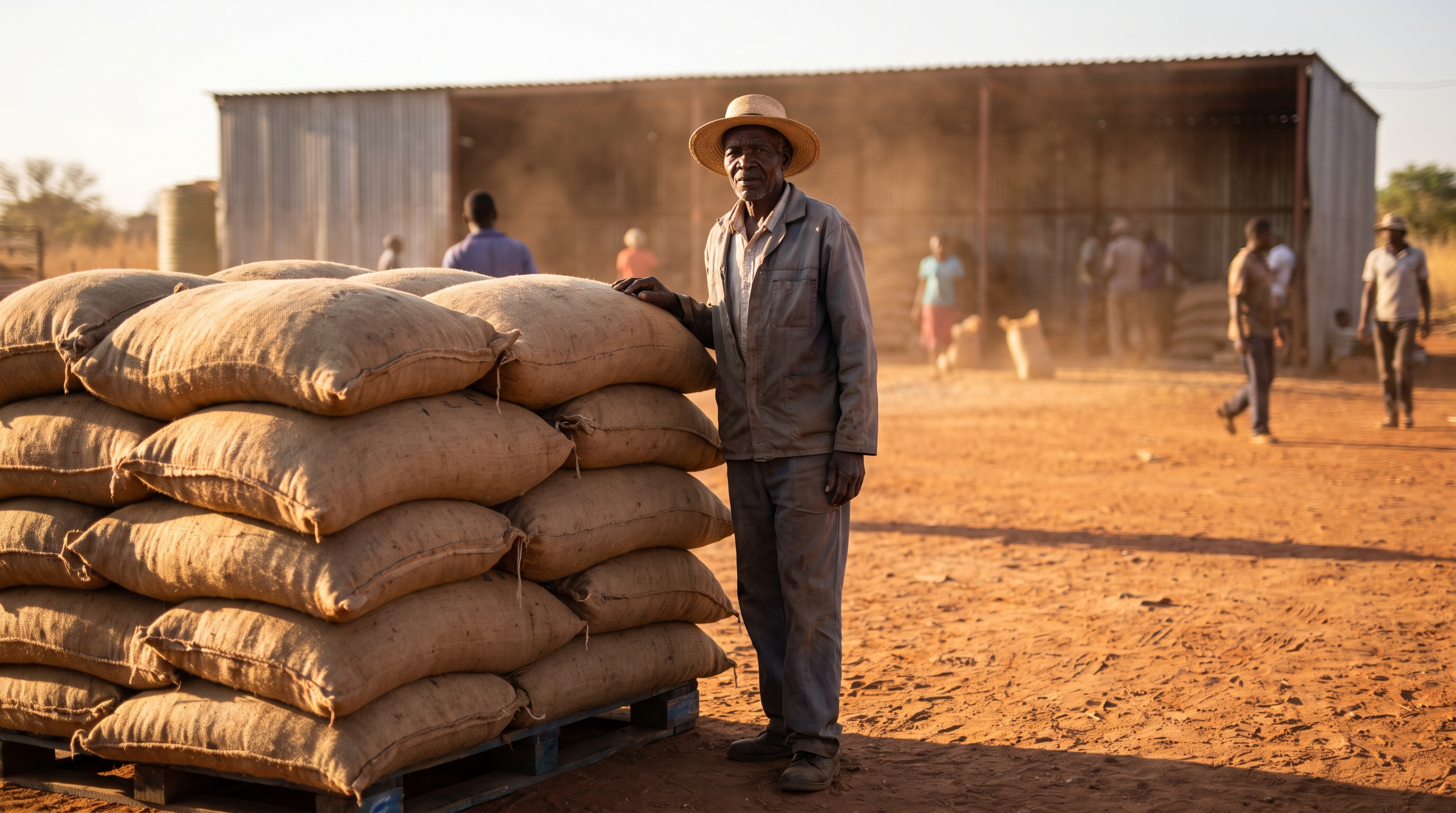
A 50kg bag of Compound D from a Harare agri-dealer is currently listed around US$35. That number matters less on its own than the direction it's heading. The World Bank's Commodity Markets Outlook, released in April, projects global fertiliser prices will climb more than 30% in 2026, driven by disruption in the Strait of Hormuz — a route that carries roughly a third of the world's seaborne fertiliser trade, about 16 million tons a year. Urea alone is forecast to average around US$675 a ton for the year, close to 60% above 2025 levels, with prices already up 53.7% between February and March.
Zimbabwe imports most of its fertiliser, so that global shock lands directly on local input budgets. It's worth planning around now, before top-dressing time, rather than discovering it at the depot in December.
Why Zimbabwe can't shrug this off
The country's annual fertiliser requirement sits at roughly 780,000 tonnes, and in 2024 the import bill for fertiliser alone came to about US$331 million. Domestic production hasn't closed that gap — Windmill, the country's established local producer, has been running at only around 10% of capacity. That leaves the sector heavily exposed to the same shipping and gas-price shocks driving the World Bank's forecast, with little buffer of local supply to soften the blow.
Government has bet on changing that structurally rather than just managing the current season. Three coal-to-fertiliser projects — a $500 million urea plant near Norton with Chinese partners Sunny Yi Feng Tiles and Wintrue Holdings, a $200 million Palm River complex under Xintai (construction starting mid-2026, production targeted for February 2027), and a $400 million project on Gudo communal land in Chiredzi — represent over $1 billion in combined investment aimed at cutting fertiliser costs by 30–40% and reaching self-sufficiency by 2030. None of that capacity lands in time to help the 2026/27 season, though. For this year, farmers are still buying into a market shaped by import costs and global gas prices, not local coal.
On the financing side, Mutapa, Zimbabwe's sovereign wealth fund, secured US$125 million from Afreximbank specifically to cover raw materials for fertiliser production for the 2025/26 season — a sign government recognises the supply risk, but a financing facility for producers, not a subsidy that lowers the shelf price a smallholder pays.
What this means for your input budget
Three practical implications follow from this. First, price volatility is now a bigger risk than price level — a bag that's US$35 today can move meaningfully before planting season closes, so locking in supply early, even in smaller batches, reduces exposure to a mid-season spike. Second, government support is flowing through state programmes rather than the open market: inputs worth ZiG4.9 billion were distributed in the first half of 2026 through Pfumvudza/Intwasa, Zunde Ramambo/Isiphala Senkosi, the Presidential Cotton Scheme and the Rural Horticulture Development Programme, and government is targeting one million hectares under Pfumvudza in 2026/27, up from roughly 170,000 hectares in 2025 — worth checking eligibility for if you farm communally, since that's effectively a way to access inputs outside the rising open-market price. Third, if you sell into the Grain Marketing Board, the producer price for maize and traditional grains for the 2025/26 season was set at US$364.75 per tonne — down US$11.73 from the US$376.48 paid the previous season. A tighter producer price alongside rising input costs squeezes the margin from both ends, which makes it worth pricing your fertiliser spend against your expected GMB or private-buyer return before committing to full-rate application on lower-value grain, rather than after.
None of this means input costs are certain to spike exactly 30% at Zimbabwean retail — local pricing depends on how much of that global pressure gets absorbed by importers, the new coal projects, and exchange-rate stability. But every credible signal points the same direction for this season: budget for higher, not flat, input costs, and treat early procurement as a hedge rather than a convenience.
Sources
- Fertilizer prices set to rise over 30% in 2026, World Bank warns, Milling Middle East & Africa Magazine
- Zimbabwe Moves to Cut Fertiliser Costs by 40% with $1 Billion Coal Projects, Mining Zimbabwe
- Afreximbank approves $125 mln for 2025/26 fertilizer supply in Zimbabwe, Ecofin Agency
- GMB Pegs Maize, Traditional Grains Prices At US$364.75 Per Tonne, The Zimbabwean
- Fertilizer Prices, Zimbabwe Building Materials Suppliers